


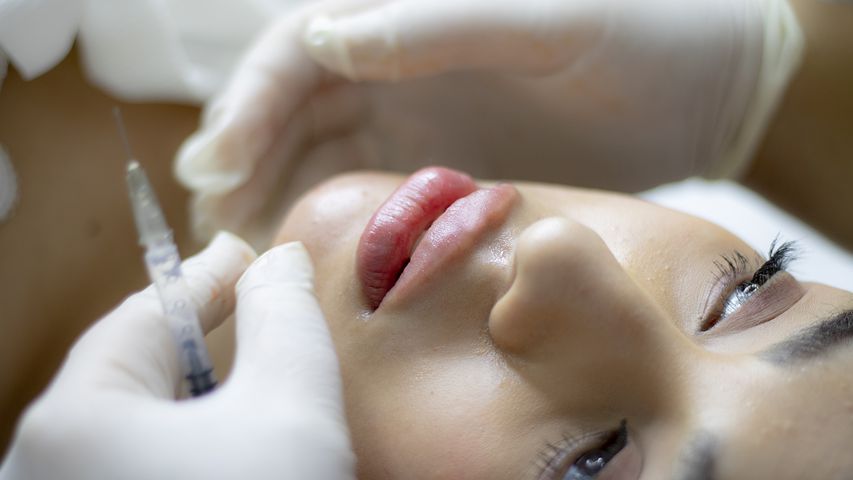
British Beauty Council backs JCCP cosmetic procedures licensing plan
The British Beauty Council is supporting the Joint Council for Cosmetic Procedures (JCCP) in its work for the design and promotion of a safe licensing scheme for non-surgical cosmetic procedures.

As part of this, the JCCP has emphasised the importance of the recent Health and Care Act to help introduce more consistent standards in the cosmetics industry.
The Health and Care Act involves the establishment of a new health and care infrastructure, designed to create an environment of cooperation and collaboration between the NHS, local government and other partners.
The Act introduces a new licensing system for practitioners who provide a range of more invasive non-surgical cosmetic procedures, which prohibits any individual in England from carrying out specified cosmetic procedures without a personal licence.
It also prohibits any person from using or permitting the use of premises in England “for the carrying out of specified cosmetic procedures” unless they have a premises licence.
The Department of Health and Social Care (DHSC) has not yet published a timeline for the implementation of this regulation. The JCCP expects that it will likely begin in the New Year.
With the British Beauty Council, Cosmetic Practice Standards Authority and Chartered Institute of Environmental Health, the JCCP is calling for injectable toxins, dermal fillers, vitamin infusions, platelet-rich plasma replacement therapy, cogs and threads, cyrolipolysis, sclerotherapy, invasive chemical peels, hair restoration surgery and a range of laser and light procedures to be included in the scheme.
The JCCP has also published a ten-point plan to help make the aesthetics sector more safe for patients. Key points include:
- Statutory regulation to ensure that only practitioners who meet the required standards for safe and effective practice can practise legally.
- National, mandatory education and training standards for all practitioners in these fields.
- Clear, transparent information from service providers on risks, benefits, costs, qualifications, and insurance.
- A clear, legal definition of what constitutes a medical procedure, a medically-related service and a cosmetic treatment.
Commenting on this, the JCCP said: "In recent years we have witnessed a dramatic increase in the number of harmful complications arising from a range of procedures, many of which have been the result of sub-standard treatment administered by inappropriately qualified and poorly trained practitioners.
"At the heart of the problem is a serious lack of independent information and advice for the public and the simple fact that this is an area that requires regulation. We now need to make sure the new licensing schemes fully safeguard people who have invasive cosmetic treatments and that they introduce consistent standards – including hygiene and safety."