


The Interview: JuE Wong, CEO, Olaplex
"Are you having Olaplex today?" It's pretty much the first thing my hairdresser asks me once the gown is on and I'm in the seat and the salon. And the first thing I ask the innovative haircare brand's CEO JuE Wong, when TheIndustry.beauty is invited to meet her on a recent trip to London, is "when did this brand become so big that hairdressers now offer it to clients before they even offer them a cup of tea?"

It's music to her ears as Wong is a big champion of hair stylists. "And do you have the Olaplex?" "Yes! Every time." It almost seems rude not to and when Wong explains the battering hair takes from regular colouring, it seems frankly foolish not to now. "Before [Olaplex] you had to suffer the pain" of hair colouring side effects, she says, "now you don't have to. You can have your cake and eat it."
"I look at them as a doctor/patient relationship," she says of the hair stylists, "I am on a rampage to elevate the respect for the hair stylist professional because they are not given respect.

"When I go to my dermatologist, you think my dermatologist worries that I don’t have enough money to pay him? You don’t have enough money? Then you are not walking through the door. The hairstylists are so empathetic, they don’t want to raise prices, they worry if their clients can afford it. We are trying very hard to help them see themselves as a doctor to their client," she explains.
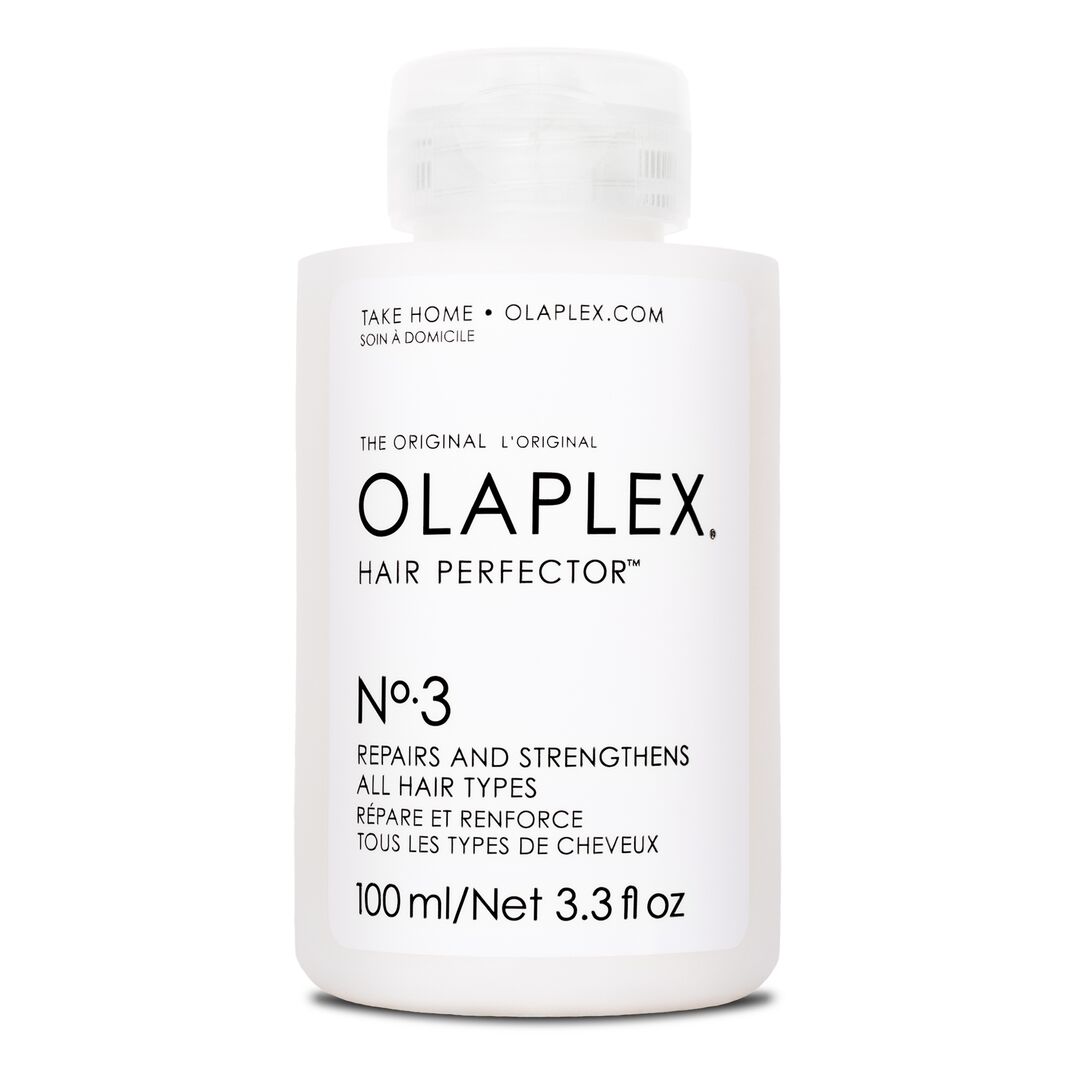
Olaplex No3
After all, Olaplex (its range is made up pre- and post-wash products along with shampoos and conditioners, which are numbered to enable customers to create their own bespoke regime) is something of a cure for all hair ills and hair stylists have acted like the prescribing medics for years now. While it is perhaps thought of as a DTC (direct to consumer) or wholesale brand by many consumers, it was actually as a professional product that Olaplex built its reputation for its almost miraculous hair bond repairing capabilities.
Olaplex was launched in 2014 as a pro product (Wong, a seasoned beauty executive, joined the business in January 2020, on the eve of the pandemic, having previously been CEO at Moroccan Oil) and this approach, Wong believes, is key to the brand's later success. The brand went from relative unknown start-up eight years ago to a listed company with a market capitalisation of $16 billion when it floated in the US last year. And it did so from standing on the shoulders of the professional hair stylist community, which pushed the product to its customers who, having bought it from their stylist, would then go on to repeat by via a retail channel.
"When we started in 2014 all the brands that started in that era were DTC; we were not. We started off as a professional brand. When we did that, we then migrated into retail and into direct to consumer. They way we saw ourselves was true omnichannel. A lot of brands will tell you they are omnichannel, but what they are doing is managing channel conflict.
"In our case, we started in pro and when we moved to specialty retail, it was four years later, it was not immediately. The reason why is we established our authority at pro, we build our brand equity at retail and then we build consumer insights with direct to consumer. Once you have built a community and a base, they want to shop whenever, wherever and however they want to," she explains.
Moreover hairstylist don't seen any conflict with Olaplex being available via other channels. Olaplex treatments are drivers of traffic to salons, just as Olaplex products are a driver of traffic to e-commerce sites or retail stores. It's a symbiotic relationship between the brand, the stylists and the retailers. An independent study by McKinsey shows that 35% of Olaplex customers who buy at retail or online are recommended by their hair stylists and 50% of consumers that buy at retail and at Olaplex.com go on and buy more product in salons, Wong points out.
"The way we distribute is we go deep, we don’t go wide. We want to be the number haircare brand, bar none, in all the channels we are in and we want to be the top five beauty brand with all the retailers we are in.
"Until we get there, we don’t move. So when you see us move it is because we have got our ranking right. And when we do that, it is synergistic and reinforcing," Wong says.

Olaplex No4
The brand has also been part of the recent "skinification" of hair care that emerged during the pandemic and prevails today. Just as consumers got more savvy about how to care for their skin and experimented with more skincare, they are now moving to do the same with their hair. No more are consumers satisfied with just tossing a bottle of shampoo and conditioner in their trolley at the supermarket, they want a personalised, results-driven regime. And they are prepared to pay for it.
"With skinification, there's going to come premiumisation. If you're going to pay £80 for your moisturiser, you're going to ask yourself 'why am I paying £5.99 for my Pantene? There's got to be something more to this.' And with that, with skinification and with premiumisation, you're going to get ritualisation. For self-care, for wellness, for your own sanity.
"And if you look at the TAM (total addressable market) for prestige haircare today, it's about $19 billion and if you look at prestige skincare, it's about $160 billion. And Olaplex is leading the prestige haircare market and we are, as of last year's reporting, only a $600 million [turnover] company," Wong says. In others words there is a lot to go at.
Olaplex won't be alone in going for that market of course but Wong welcomes others to come on the journey too. "Monopoly is actually bad for business because people get complacent, brands get complacent," she says. That's one thing she won't let the brand become. It was build on innovation and patented technology (the first shampoo took four years to launch) and it will continue to push forward. Others may try to copy but they won't have the technological know-how of Olaplex, which has its own in-house R&D lab in the Pfizer campus in New York containing 14 dedicated R&D people, which represents just over 10% of its entire workforce. The business has filed 103 patents and there are more to come.
"When I see headlines saying 'this brand is the next Olaplex' I think 'go to town. Olaplex don't even want to be the next Olaplex'," she says. "We've been to earth, we're now going to Mars!" she jokes.
Might going to Mars be a euphemism for taking the brand into other verticals in which its technology might also apply, such as skincare and nailcare, which was mooted with the business floated last year.
"We will never rest on our laurels, there will be new technologies, new applications, new research, we always want to stay at the cutting edge," she says. "If we don't have it right and it's not perfect, we don't do it."
"Our patent has skincare and nail care applications because, guess what, your hair is keratin, your nails are keratin, your skin is keratin. When you think about it a skincare company can do hair care but it's very rare for a haircare company to go into skincare. So we wanted to understand. We have the technology but do we have the permission to play and to win? We did a customer survey which found that 80% of our customers would love to see a skincare product from Olaplex and more than 50% would switch out their current brand to an Olaplex brand sight unseen. When we pressed, 'why?' They said 'because Olaplex is a science and technology company'.
"They saw us as more than a haircare company but I shared earlier how big the runway is for hair and we are but scratching the surface and if we take our eyeball too much off it we are creating a vacuum and vacuums are meant to be filled. Someone else will come and we are not going to let that happen. We as a team are mindful that they opportunity is there [in skincare] and we can press that button should we need to, but we are going to focus on hair," Wong explains.
It wouldn't be surprising to see Olaplex expand beyond its core hair base but, given that it did take four years for the first hair product to be developed, it's unlikely to be any time soon. No product will be rushed out, despite the initial welcome it might receive from consumers, on Wong's watch. You only get one chance or perhaps two to sell someone a new product and if it falls short, you're in trouble. "If people don't replenish, you don't have a business. Results are everything."
And Olaplex's results have been impressive, not just from a hair bond building capacity either. Its growth has been phenomenal and, unlike many start ups, it generates profit, as well as strong sales growth. So much so that when Wong was doing her due diligence on the business before joining, she told the then private equity backers that they numbers must be wrong. Such fast growth usually comes complete with a fast cash burn, but the numbers were indeed right. Wong told herself "If I can add value here, it's going to be very material. Obviously, I never thought Covid was going to hit."
But thanks to strong social media and continuing to support hair stylists, who were willing to keep selling the product for commission while their salons were closed, the brand emerged in a stronger than ever position. Whether it feels the need to expand into other areas or not, there feels like no reason why, much like our hair bonds, Olaplex can't just continue to go from strength to strength.